Exclusive Access to the 2026 Planter Collection




24K subscribers
Get first-hand updates on our latest patented designs, bulk pricing offers, and global gardening trend reports.
How planter MOQs and packing rates work, why nested packing changes freight cost, and how to calculate container loads before you place an order.
Most planter factories set a minimum order quantity per colour and per size, typically 200–500 pieces for a standard mould and 1,000+ for a new colour. Mixing sizes within one model is usually allowed, which lets a buyer build a balanced range without committing to a single diameter.
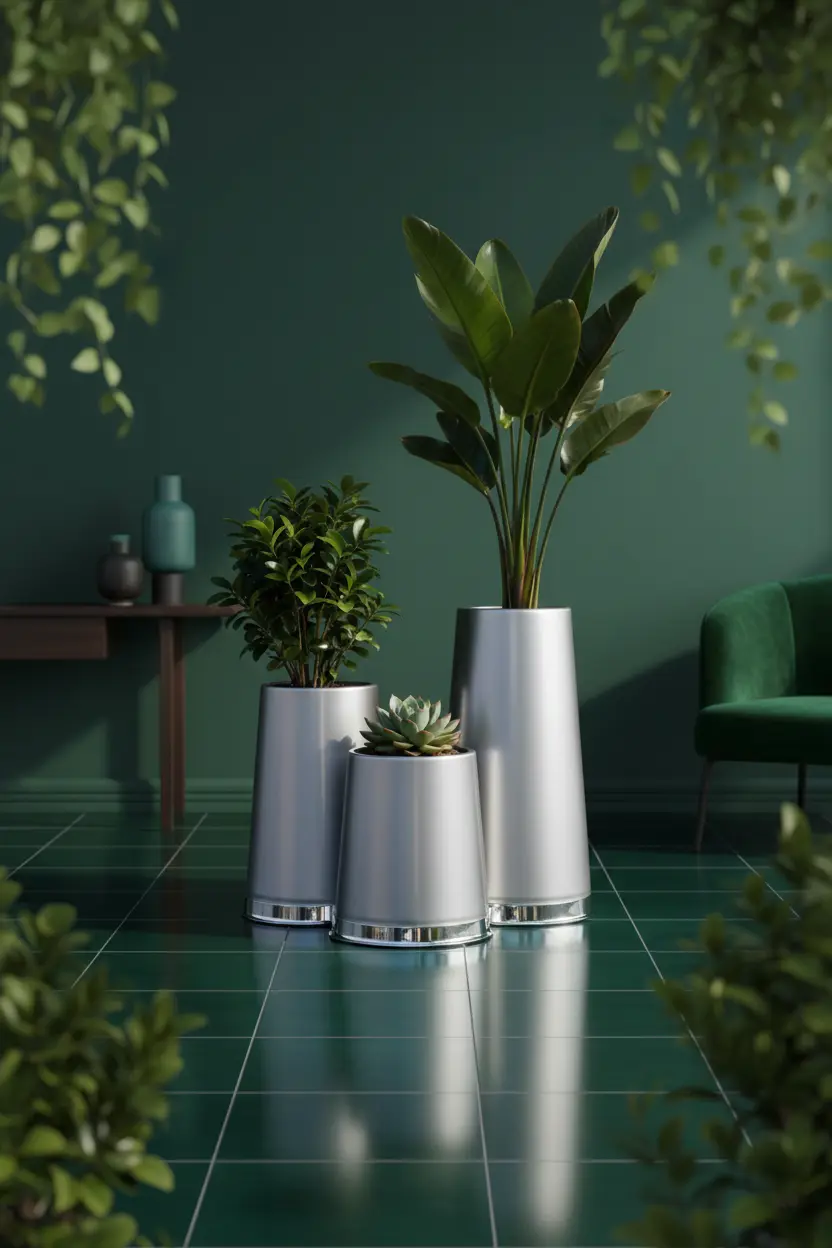
Planters taper, so they nest. A well-designed range packs 3–5 pots into the space of one, which is why a 60 cm carton can hold several large planters. When comparing quotations, always compare the packing rate (pieces per carton) and the carton dimensions rather than the unit price alone — two suppliers with the same unit price can differ by 30% in landed cost.
Work in cartons, not pieces. Take the carton volume in cubic metres, divide the container’s usable volume (about 28 m³ for a 20ft, 58 m³ for a 40ft, 68 m³ for a 40HQ), then multiply by pieces per carton. Always leave 5–8% for pallet gaps and load irregularities.
Confirm the colour against a physical sample, not a screen; agree the packing method (nested, with or without inner liner); confirm whether drainage holes are moulded or drilled; and ask for the carton marks and barcode requirements in writing. For EU and UK shipments, check the packaging recycling registration requirements before the carton artwork is printed.
Our gallon pot range is the usual entry point for growers, while colour ranges suit garden centres and florists. Every product page carries the packing size and packing rate so you can calculate a container load directly.