Exclusive Access to the 2026 Planter Collection




24K subscribers
Get first-hand updates on our latest patented designs, bulk pricing offers, and global gardening trend reports.
A practical rule of thumb for matching pot diameter and height to root ball size, plus a size guide for the planters we manufacture from 10 cm to 100 cm.
The single most reliable guide is the size of the root ball. As a rule, the new planter’s inner diameter should be about 5–7 cm larger than the root ball, and the depth should be roughly the same as, or slightly more than, the root ball’s height. A pot that is far too large holds water in the bottom layer for too long, which is the most common cause of root rot in indoor planters.
Two planters with the same top diameter can behave very differently. A tall, narrow pot dries out more slowly at the bottom and suits deep-rooted species such as palms and ficus. A wide, shallow bowl dries faster and suits succulents, herbs and surface-rooting plants.
Leave 2–3 cm between the soil surface and the rim so water does not spill over when you irrigate. If the planter has a self-watering reservoir, follow the manufacturer’s water-level indicator instead of filling to the rim.
A 60 cm planter filled with soil can weigh 40–60 kg. For balconies and roof terraces check the load rating before choosing a large pot, and prefer lightweight PP planters with a nested design over concrete or ceramic.
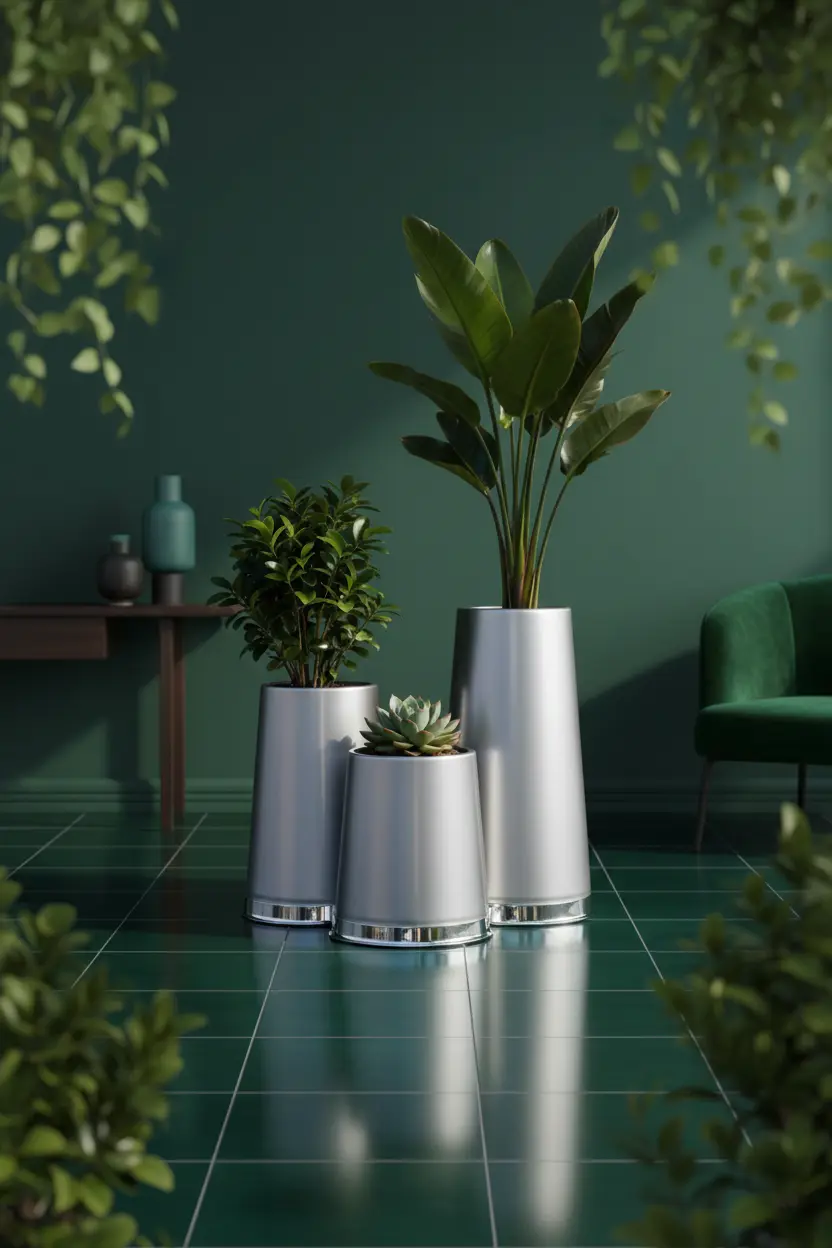
For hospitality and office projects we usually suggest mixing three sizes on one floor plate — for example 30 cm, 45 cm and 60 cm from the same range — so the planting reads as a set rather than a collection of unrelated pots. Our painted planter range and gypsum-texture range both run continuously from small tabletop sizes to 70 cm floor planters.